A
AstroAnt n., rover. MIT Media Lab, United States, 2025. Matchbox sized magnetic wheeled robot designed to crawl over a lunar rover's surface and take thermal readings while it drives. Lost.
ATHLETE n., rover. NASA JPL, United States, 2009. A six limbed wheel legged lunar cargo hauler that rolls or walks as terrain demands. Research platform.
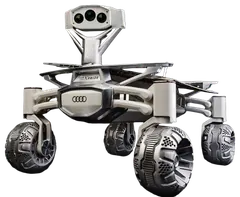
Audi Lunar Quattro n., rover. Planetary Transportation Systems and Audi AG, Germany, 2015. Small German lunar rover developed in 2015 by engineers of the PTScientists team, with backing from Audi and partners in several countries.
B
Bridget n., rover. Airbus Defence and Space, United Kingdom. Airbus Mars rover testbed used in the Stevenage Mars Yard and in Atacama Desert trials of European rover autonomy software. Research platform.
BRUIE n., rover. NASA Jet Propulsion Laboratory, United States. Buoyant two wheeled rover that drives upside down along the underside of ice, tested in Antarctic and Alaskan lakes. Research platform.
C
CADRE n., rover. NASA Jet Propulsion Laboratory, United States. Set of three suitcase sized solar rovers built to explore the Moon as an autonomous team sharing a single radar measurement. Prototype.
Colmena n., rover. Universidad Nacional Autonoma de Mexico, Mexico, 2024. Swarm of five palm sized Mexican micro robots intended to self organise on the lunar regolith, lost with the Peregrine lander. Lost.
Cool Robot n., rover. Dartmouth College, United States, 2005. Solar powered four wheeled robot designed to tow instrument sleds across polar snowfields through the continuous daylight of summer. Research platform.
CubeRover n., rover. Astrobotic Technology, United States. Class of small modular planetary rovers developed by Astrobotic Technology, applying the CubeSat approach of standard, inexpensive off the shelf parts. In development.
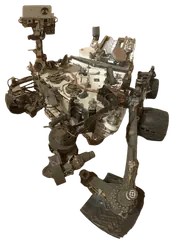
Curiosity n., rover. NASA JPL, United States, 2012. The car sized nuclear laboratory still climbing Mount Sharp after a decade. In production.
D
Dante I n., rover. Carnegie Mellon University, United States, 1992. Eight legged tethered walking robot sent into the crater of Mount Erebus in Antarctica, which failed a few metres into its descent. Retired.
Dante II n., rover. Carnegie Mellon University, United States, 1994. Tethered eight legged volcano robot that descended more than 200 metres into the crater of Mount Spurr in Alaska in 1994. Retired.
DuAxel n., rover. NASA Jet Propulsion Laboratory, United States. Two part JPL rover that splits in half so a tethered two wheeled module can rappel down cliffs and crater walls. Research platform.
F
FIDO n., rover. NASA Jet Propulsion Laboratory, United States, 1999. Terrestrial prototype rover used to rehearse Mars Exploration Rover science operations in desert field tests before the 2003 launches. Retired.
FLEX n., rover. Venturi Astrolab, United States. Large commercial lunar rover prototype that can carry cargo or two standing astronauts, demonstrated in field trials in the California desert. Prototype.
I
Idefix n., rover. CNES and German Aerospace Center, France, 2026. Small rover built by France's CNES and Germany's DLR with help from JAXA, carried by the MMX spacecraft to set down on and explore the Martian moon Phobos. In service.
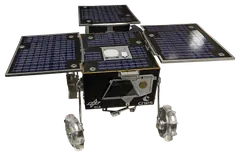
Iris n., rover. Carnegie Mellon University, United States, 2024. Two kilogram student built lunar rover that flew on the Peregrine lander in January 2024 but never reached the Moon after the lander failed. Lost.
K
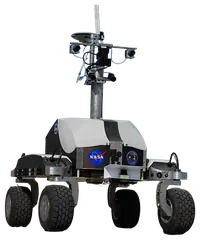
K10 n., rover. Intelligent Robotics Group, United States. Family of prototype planetary rovers from NASA's Intelligent Robotics Group, with third generation units using four wheel drive and all wheel steering. Prototype.
L
LAMA n., rover. Mobile Vehicle Engineering Institute and Laboratory for Analysis and Architecture of Systems, Russia, 1990. French autonomous Mars rover prototype from 1990, developed by the Mobile Vehicle Engineering Institute and the Laboratory for Analysis and Architecture of Systems and weighing 300 kg. Prototype.
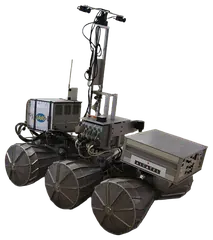
LEV-1 n., rover. JAXA, Japan, 2024. Small hopping robot released from JAXA's SLIM lander in January 2024 that relayed pictures taken by its companion SORA-Q back to Earth. Mission completed.
Lightweight Rover Unit n., rover. DLR Institute of Robotics and Mechatronics, Germany, 2017. German four wheeled research rover used in Mount Etna campaigns to test autonomous lunar style survey and sample collection. Research platform.
Lunar Roving Vehicle n., rover. Boeing with General Motors Delco for NASA, United States, 1971. Battery powered four wheeled car driven by Apollo astronauts on the Moon, extending each crew's exploration range far beyond walking distance. Mission completed.
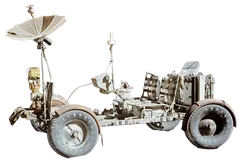
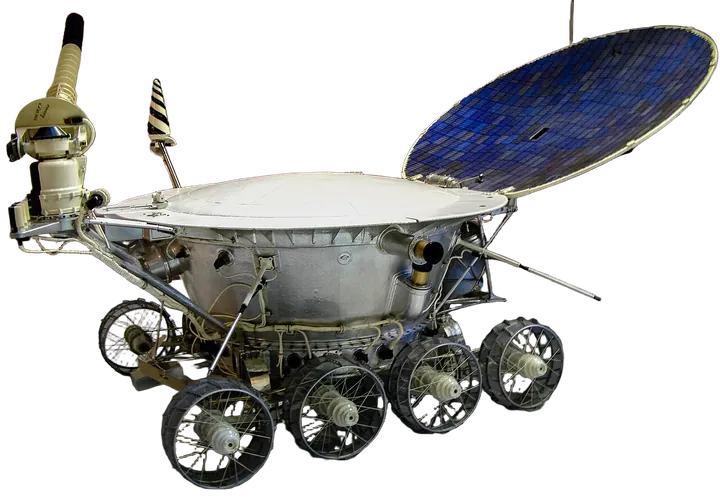
Lunokhod 1 n., rover. NPO Lavochkin and VNII Transmash, Soviet Union, 1970. First robotic rover to operate on another world, driving 10.5 kilometres across Mare Imbrium for the Soviet Luna 17 mission. Retired.
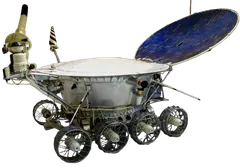
Lunokhod 2 n., rover. NPO Lavochkin and VNII Transmash, Soviet Union, 1973. Second Soviet lunar rover, delivered by Luna 21 to Le Monnier crater, which drove roughly 39 kilometres in under four months. Retired.
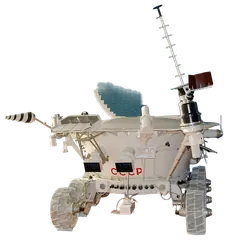
Lunokhod 3 n., rover. NPO Lavochkin and VNII Transmash, Soviet Union, 1977. Third generation Lunokhod completed in 1977 for a mission that was never funded, now preserved as a museum exhibit near Moscow. Retired.
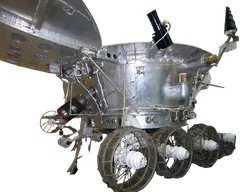
LUPEX rover n., rover. Mitsubishi Heavy Industries, Japan. Tracked lunar rover from Mitsubishi Heavy Industries of Japan for the Lunar Polar Exploration Mission, weighing 350 kg and measuring 2 m long. In development.
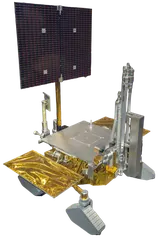
M
MAGGIE n., rover. Jet Propulsion Laboratory, United States. Engineering test rover, its name short for Mars Automated Giant Gizmo for Integrated Engineering, used by the Jet Propulsion Laboratory as an Earth testbed for NASA's Curiosity rover.
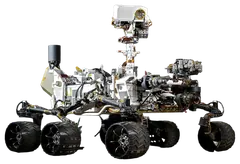
MAGPIE n., rover. ispace EUROPE S.A., Luxembourg. Lunar rover being developed by ispace for the European Space Agency to look for water ice near the Moon's south pole. In development.
MAPP n., rover. Lunar Outpost, United States, 2025. Commercial prospecting rover carrying a cellular network demonstration to the Moon, stranded aboard the IM-2 lander after it tipped over. Lost.
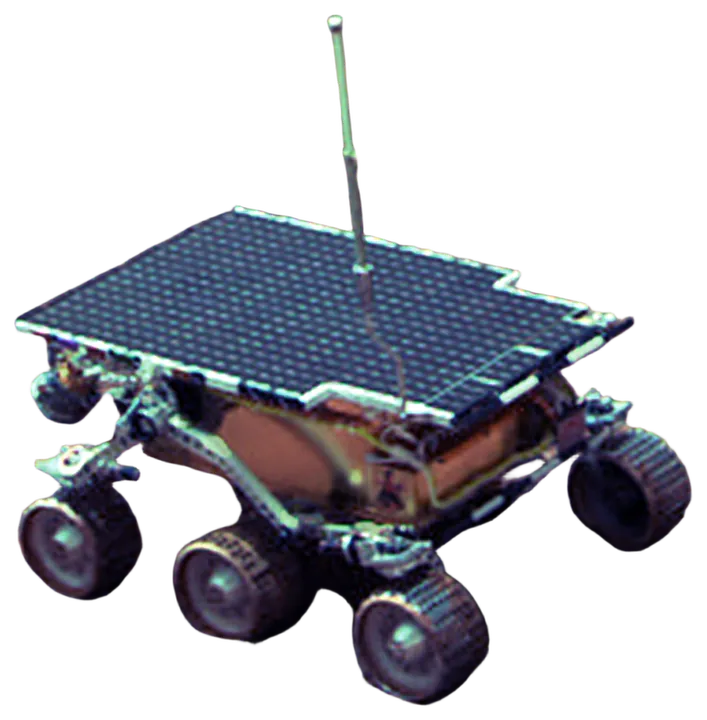
Marie Curie n., rover. NASA Jet Propulsion Laboratory, United States, 1996. Flight spare twin of the Sojourner microrover, built for Mars Pathfinder and later used for engineering work before museum preservation. Retired.
Marsokhod n., rover. VNII Transmash, Russia, 1993. Soviet designed six wheeled rover chassis used in Russian, French and American field trials at volcanoes and deserts through the 1990s. Research platform.
MASCOT n., rover. DLR and CNES, Germany, 2018. Shoebox sized lander carried by Hayabusa2 that used an internal swinging arm to hop across asteroid Ryugu in 2018. Mission completed.
MINERVA n., rover. JAXA, Japan, 2005. Series of Japanese rovers built by JAXA to explore the surfaces of asteroids, carried on the Hayabusa and Hayabusa2 missions. Mission completed.
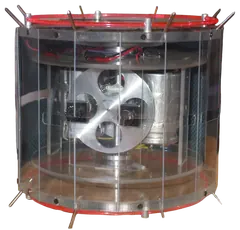
MINERVA-II1 n., rover. JAXA, Japan, 2018. Pair of small rovers released by Hayabusa2 onto asteroid Ryugu in 2018, the first rovers to move across the surface of an asteroid, which they did by hopping. Mission completed.
MoonRanger n., rover. Carnegie Mellon University and Astrobotic, United States. Suitcase sized autonomous lunar rover built to scout hundreds of metres from its lander without waiting for driving commands. Prototype.
N
Nomad n., rover. Carnegie Mellon University, United States, 1997. Car sized Carnegie Mellon field rover that drove 215 kilometres across the Atacama Desert and later searched Antarctica for meteorites. Retired.
O
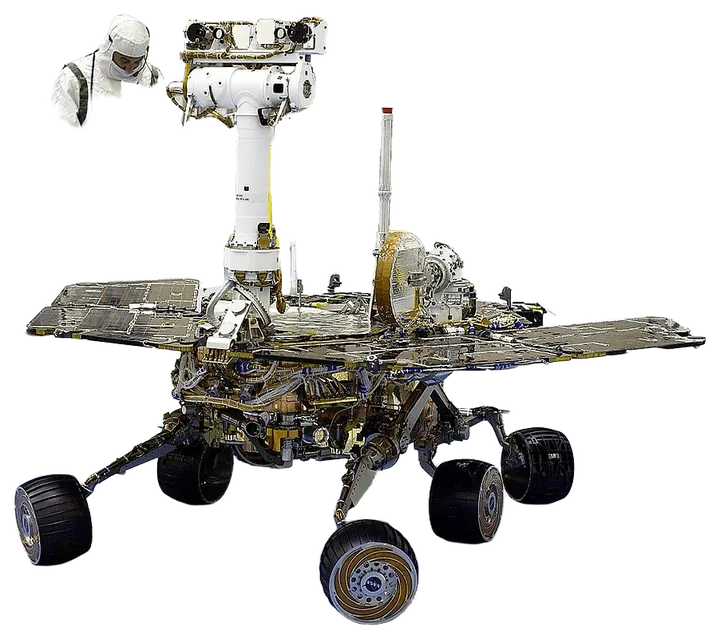
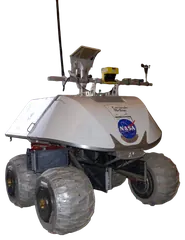
Opportunity n., rover. NASA Jet Propulsion Laboratory, United States, 2003. Twin of Spirit that landed in Meridiani Planum, confirmed water altered bedrock and drove 45 kilometres over more than fourteen years. Retired.
OPTIMISM n., rover. NASA Jet Propulsion Laboratory, United States, 2020. Full scale Earth twin of Perseverance kept in JPL's Mars Yard to rehearse drives and debug problems with the flight rover. Research platform.
P
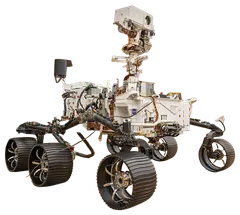
Perseverance n., rover. NASA Jet Propulsion Laboratory, United States, 2020. Mars 2020 rover exploring Jezero crater, caching rock cores for possible return to Earth and testing oxygen production from atmospheric carbon dioxide. In service.
Pragyan n., rover. Indian Space Research Organisation, India, 2023. Indian solar rover that explored the high southern latitudes of the Moon for one lunar day after the Chandrayaan-3 landing. Mission completed.
PrOP-M n., rover. VNII Transmash and NPO Lavochkin, Soviet Union, 1971. Small tethered walking rover carried by the Mars 2 and Mars 3 landers, intended to skid across the surface on twin skis. Lost.
R
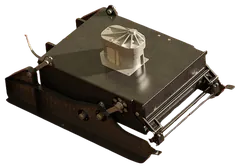
Rashid n., rover. Mohammed bin Rashid Space Centre, United Arab Emirates, 2022. Emirati micro rover built to study lunar dust and plasma, lost when the ispace Hakuto-R lander crashed in April 2023. Lost.
Rocky 7 n., rover. NASA Jet Propulsion Laboratory, United States, 1996. JPL research microrover that added a camera mast and sampling arm to the Sojourner class design, field tested in the Mojave Desert. Retired.
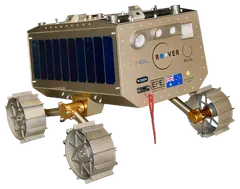
Roo ver n., rover. ELO2, Australia. Lunar rover funded by the Australian Space Agency and under construction by the ELO2 consortium, with launch to the Moon's south polar region planned for 2030. In development.
Rosalind Franklin n., rover. Airbus Defence and Space for the European Space Agency, Europe. European ExoMars rover built to drill two metres below the surface of Oxia Planum in search of preserved organic biosignatures. Prototype.
S
Scarab n., rover. Carnegie Mellon University, United States, 2008. Lunar prospecting testbed rover with a body that kneels to press a drill into the ground, tested on Hawaiian volcanic soil. Research platform.
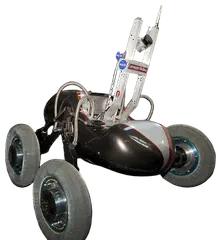
Scarecrow n., rover. NASA Jet Propulsion Laboratory, United States, 2010. Stripped down mobility twin of Curiosity built at reduced mass so its Earth weight matches the flight rover's weight on Mars. Research platform.
SherpaTT n., rover. DFKI Robotics Innovation Center, Germany, 2016. Hybrid wheeled leg rover with actively articulated suspension, field tested in the Utah desert and in Morocco for Mars analogue work. Research platform.
Sojourner n., rover. NASA Jet Propulsion Laboratory, United States, 1996. Six wheeled microrover of the Mars Pathfinder mission, the first wheeled vehicle to drive on another planet, operating in Ares Vallis. Mission completed.
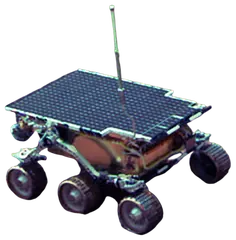
SORA-Q n., rover. JAXA with Tomy, Sony and Doshisha University, Japan, 2023. Transformable ball shaped lunar robot the size of a baseball that photographed the tipped over SLIM lander in January 2024. Mission completed.
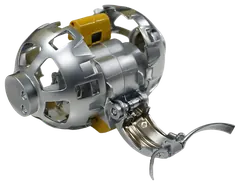
Sorato n., rover. ispace and Team Hakuto, Japan, 2017. Four kilogram carbon fibre rover built for the Google Lunar XPRIZE by Team Hakuto, completed and tested but never launched. Retired.
Space Exploration Vehicle n., rover. NASA, United States, 2008. NASA pressurised rover prototype on a twelve wheel chassis, tested in Arizona desert campaigns as a mobile habitat for two crew. Prototype.
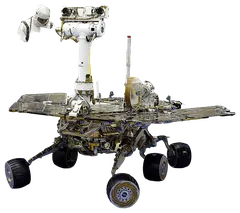
Spirit n., rover. NASA Jet Propulsion Laboratory, United States, 2003. Solar powered Mars Exploration Rover that worked in Gusev crater for six years and found mineral evidence of ancient hot water. Retired.
T
Tenacious n., rover. ispace Europe, Luxembourg, 2025. Five kilogram European built micro rover with a scoop and an artwork payload, lost when the Resilience lander crashed in June 2025. Lost.
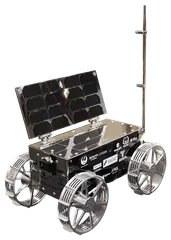
V
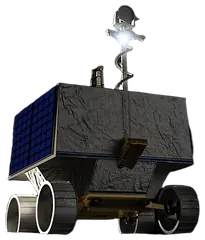
VIPER n., rover. NASA, United States, 2024. Golf cart sized NASA rover built to hunt water ice at the lunar south pole with a metre long drill and neutron detector. Prototype.
VolcanoBot 2 n., rover. NASA Jet Propulsion Laboratory, United States, 2015. Small two wheeled tethered robot built to crawl into volcanic fissures at Kilauea and map their inner shape in three dimensions. Retired.
Y
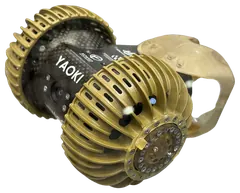
Yaoki n., rover. Dymon, Japan, 2025. Palm sized Japanese commercial rover with two wide wheels that can right itself, flown on the IM-2 mission but never deployed. Lost.
Yeti n., rover. Dartmouth College, United States. Four wheeled polar survey robot that tows radar over Antarctic and Greenland ice to find crevasses and buried structures. Research platform.
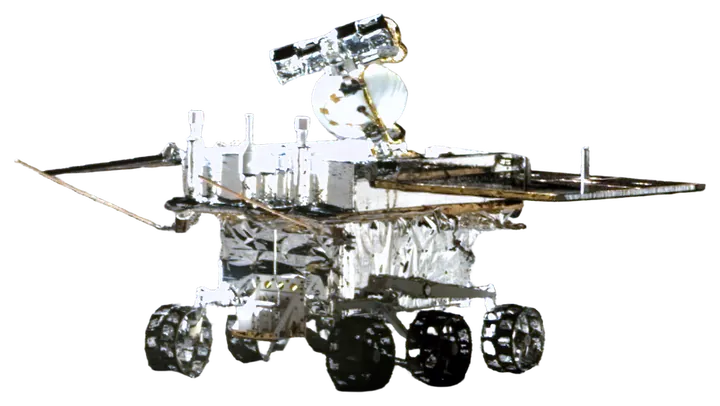
Yutu n., rover. China Academy of Space Technology, China, 2013. China's first lunar rover, landed in Mare Imbrium by Chang'e 3, which lost mobility after one lunar day but kept transmitting for years. Retired.
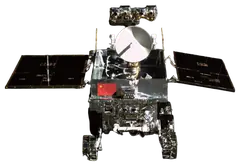
Yutu-2 n., rover. China Academy of Space Technology, China, 2018. Chinese far side lunar rover delivered by Chang'e 4, the longest operating rover on the Moon, with 1,613 metres logged by September 2025. In service.
Z
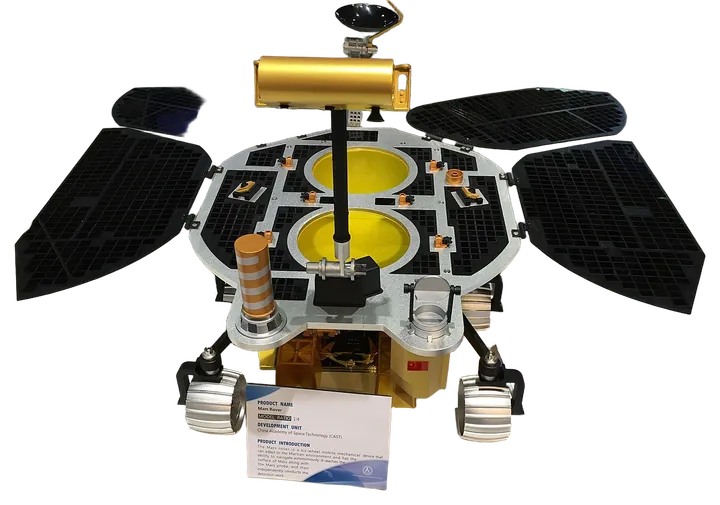
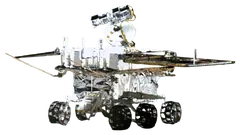
Zhurong n., rover. China Academy of Space Technology, China, 2020. China's first Mars rover, which explored southern Utopia Planitia for a year and found evidence of water altered soils and buried shorelines. Lost.
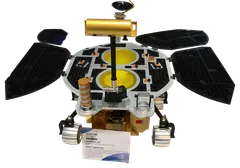
Zoë n., rover. Carnegie Mellon University, United States, 2004. Solar powered astrobiology rover used in the Atacama Desert, the first robot to detect and map life autonomously in a desert. Research platform.